
Balance Testing
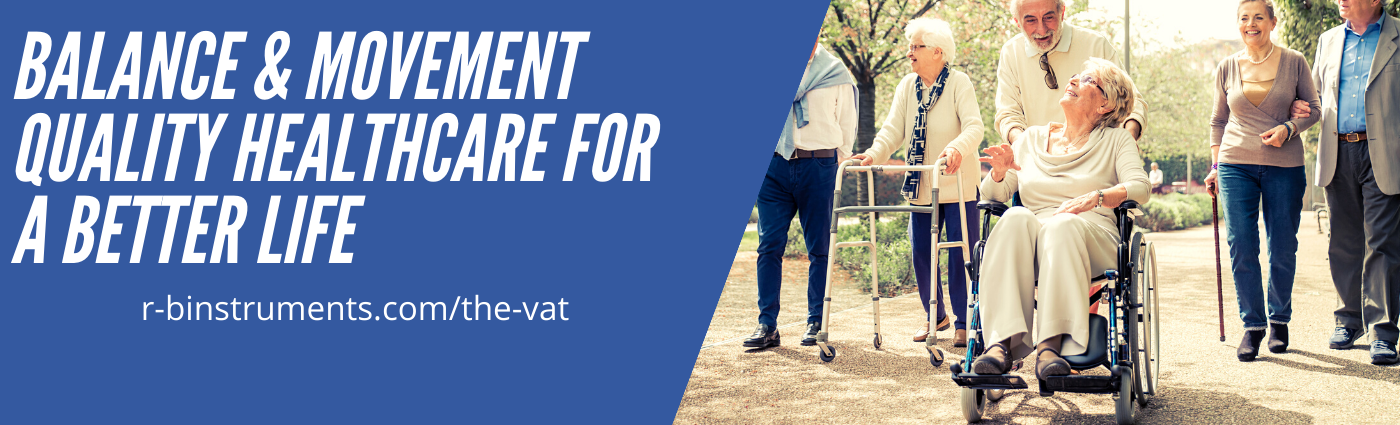
50% of all seniors have a vestibular problems,
according to Johns Hopkins.
Many balance testing devices use goggles which are difficult to work with, no matter how light weight they make the cameras, you still need to strap the apparatus on the patients head tightly to keep them from moving during testing. In this senerio if the patients moves the goggles vibrate or shift causing artifact in the camera and on your print out. Camera alignment can also be difficult, the cameras need to sinc with the patients pupil. Patients with make up, droopy or lazy eyes are very problematic.
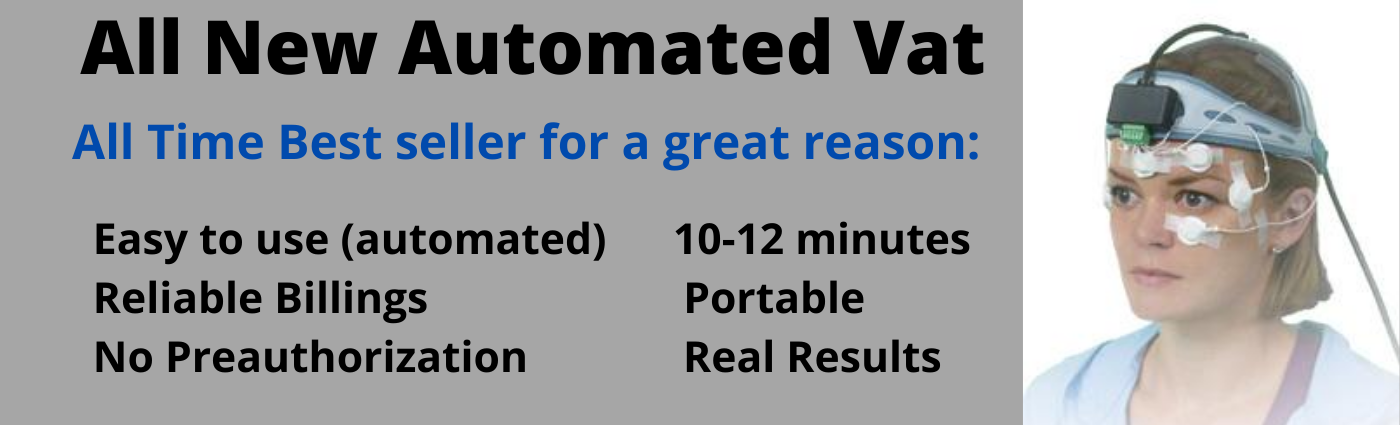
We find using electrodes to be a lot easier and more accurate, once the electrodes are placed on the patient we are ready to go. No calibrating sequence, no shacking and vibrating cameras strapped to the head. This means your set-up time is only a matter of a minute or so.
The other major problem physicians had was the amount of time it took to do all the test. We have narrowed this down to a simple 12 minutes and automated the process. Since most falls are caused by a vestibular problem this is where we are going to concentrate most of our efforts. The vestibular problems are also easily treatable in the physicians office. The more complicated and time consuming problems can be referred on to an ENT.
The third major problem physicians have is most balance screening systems have complicated and hard to read reports. That is why they sell you a consulting plan to read and interpret their print outs.
The Vat Plus system is different. It is so easy to read that your medical assistant can do it on the spot. This allows you to test and treat on the same day all in under 30 minutes, which means your patients can go home feeling better in just one visit.
Fast, easy and profitable, the Vat Plus system is a great solution for the busy family practice that wants to help their elderly population and keep them safe from falls, while generating a positive revenue flow.
Everything For Just $27,995.00
PRODUCT INFORMATION
Model # E-V2000-15 or current Model
E-V2000-15 medical equipment including
*Hardware (Laptop, Headgear, Light Box)
*Carrying Case
*14 Pouches of Electrodes
”Power Supply
*Technical Manual installed on laptop ”Interface Cables
*Software WSR Combo 116.6
*Starter Kit (Scissors, Tape, Gauze Pads, Alcohol pads, Surgical Caps, a tube of Signa Gel)
*Surge Protector
*2 Year Hardware Warranty
Includes Full Delivery with on-site training.
This unit is rock solid, mobile and easy to do. We can train any of your techs to run it easily.
ENG/VAT $230-$350 (12 minutes).
92540 Basic Vestibular Test
92546 Sinusoidal Rotation Test
92547 Use of Vertical Electrodes
THERAPY TRAINING $30. (2 minutes)
97110-GP Therapeutic Activities
FOLLOW UP $100-$200 (5 minutes)
92546 Sinusoidal Rotation Test
92547 Use of Vertical Electrodes
Return on Investment Analysis
Average Reimbursement Per Patient $230 – $350
Patients Per Day 1 2 3 4
Gross Monthly Revenue $4,400 $8,800 $13,200 $17,600
Monthly Payment $990 $990 $990 $990
Monthly Net Revenue $3,410 $7,810 $12,210 $ 16,610
Annual Net Revenue $40,920 $93,720 $146,520 $199,320
(Turn volume way up)
Only 2 automated tests per day will net over $10,000 per month.
ENG Test Battery includes:
Oculomotor Screening
- Saccadic Evaluation
- Smooth Pursuit Tracking
- Optokinetic Testing
- Gaze Testing
- Positional and Positioning
- 6 Static Positions
- 3 Dynamic Positions
- 1 USER CHOICE Position
- Caloric Testing
- Reduced Vestibular Response
- Directional Preponderance
- Fixation Suppression
How many of your patients can answer yes to at least one of these questions?
1 yes qualifies them
1. Have you fallen in the past 12 months?
2. Do you feel dizzy or off balance if you make a sudden change in movement, such as bending down or quickly turning?
3. Do you have any hearing loss?
4. Do you require assistance to walk, such as a person supporting you, use a walker or a wheelchair?
5. Do you have balance problems when you are walking or climbing stairs?
The report:
SYNAPSYS VNG
We offer full installation and Training
ACCURATE ANALYSIS OF VESTIBULAR FUNCTION
SYNAPSYS VNG offers a large range of tests including vestibular and ocular-motor tests.
As of today, SYNAPSYS VNG is the only available system on the market with a wireless camera that grants an unparallel user experience in regard to patient mobility, freedom of movements and flexibility of use. SYNAPSYS VNG is also available with standard wired camera
ACCURATE ANALYSIS OF VESTIBULAR FUNCTION
ENT, audiologists and physiotherapists can study the functions of vestibular apparatus with an accurate analysis of eye movements, focusing in particular on involuntary rhythmic movements called “nystagmus”.
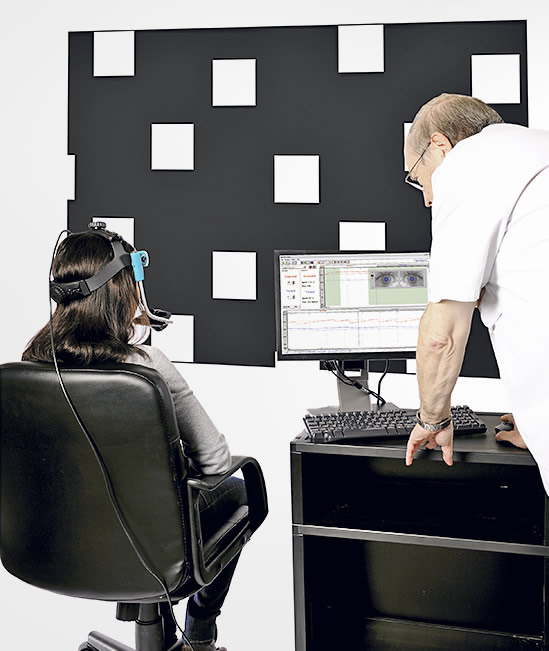
Patient’s eyes are framed by infrared sensitive cameras, mounted on a comfortable and lightweight mask, while the software records and analyzes patient’s movements. Thanks to predefined protocols and accurate measurements, the Synapsys VNG system makes video nystagmography examination fast and accurate and allows precise diagnosis of balance disorders.

COMPLETE TEST BATTERY
The Synapsys VNG system allows a complete VNG analysis thanks to the large battery of tests available, including vestibular and ocular-motor tests.
Synapsys VNG is a scalable system: you can create the configuration that best suits your needs by choosing from different cameras, exams and options available.
For vestibular investigations such as spontaneous-positional nystagmus and caloric tests, the ultra-lightweight VNS 4X mask offers high patient comfort.
For the analysis of eye movements (saccadic, pursuit and optokinetic), visual stimulations are controlled by the software and can be shown on a large display or on a video projector.
The VNS 4X mask, when set in “open field” mode, offers the patient a wide field of view and allows classic monocular analysis. Advanced high-frequency binocular analysis is available with the Visio mask (optional). Visio has been designed for ocular-motor tests: the movements of the two eyes are analyzed simultaneously by a camera placed a few centimeters away from the patient, which allows a real open field vision.
EASY TO USE AND CLEAR RESULTS
Thanks to the eye tracking system, the software immediately detects the patient’s pupil, without the need of adjustments. The tracking system works perfectly even under difficult conditions, such as dark eyelids, without the need of complex setup operations.
Normative data, a wide selection of print modes (graphs, charts), customizable examination protocols, mono- or binocular analysis, insertion of markers during the examination – all this, along with many other functions, makes the Synapsys VNG a complete and extremely easy to use system. The Synapsys VNG will guide you through the analysis of balance disturbances.

DESIGNED BY A DOCTOR FOR DOCTORS
Designed together with Dr. Eric Ulmer, the Synapsys VNG system offers a comprehensive set of information to guide you easily and efficiently through the patient evaluation process. The system has been constantly updated and refined over the years, thanks to continuous interaction with users.
| AVAILABLE MODELS | SCREENING STANDARD VISIO |
| AVAILABLE EXAMS | POSITIONAL/SPONTANEOUS NYSTAGMUS CALORIC NYSTAGMUS SACCADES/SMOOTH PURSUIT (SYNAPSYS VNG STANDARD AND VISIO) GAZE (SYNAPSYS VNG STANDARD AND VISIO) OPTOKINETIC NYSTAGMUS (SYNAPSYS VNG VISIO, OPTIONAL FOR SYNAPSYS VNG STANDARD) |
| CALIBRATION | DEFAULT GEOMETRIC VISUAL |
| FEATURES | VISUAL STIMULATION CONTROLLED VIA SOFTWARE (SYNAPSYS VNG STANDARD AND VISIO) FIXATION LIGHT OCULAR FIXATION INDEX XOMPUTING FOR CALORIC TEST (SYNAPSYS VNG SCREENING, STANDARD AND VISIO) VIDEO RECORDING SOFTWARE UPGRADEABILITY (SYNAPSYS VNG SCREENING, STANDARD AND VISIO) |
| MONOCULAR VNS4X CAMERA | RESOLUTION: 744 X 480 PX LENS: 4.2 MM FIELD OF VIEW: 100° X 55° (ORIZ. X VERT.) SAMPLING RATE: 25 HZ WEIGHT: 150 G (WITHOUT CABLES) |
| BINOCULAR VISIO MASK | RESOLUTION: 752 X 480 PX LENS: 4.3 MM FIELD OF VIEW: LIMITLESS X 55° (ORIZ. X VERT.) SAMPLING RATE: 50, 100 OR 200 HZ WEIGHT: 270 G (WITHOUT CABLES) |
| CLASSIFICATION | CLASS IIA |
| STANDARD | EN 60601-1 / EN 60601-1-2 |
Down Load Data Sheet
SYNAPSYS VVIB
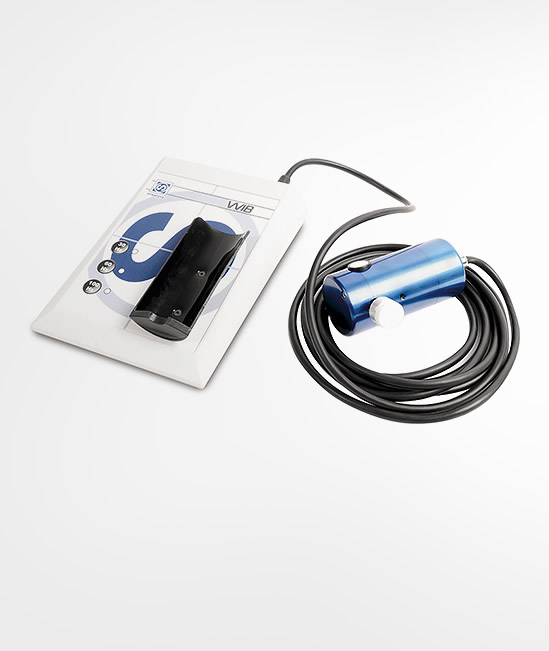
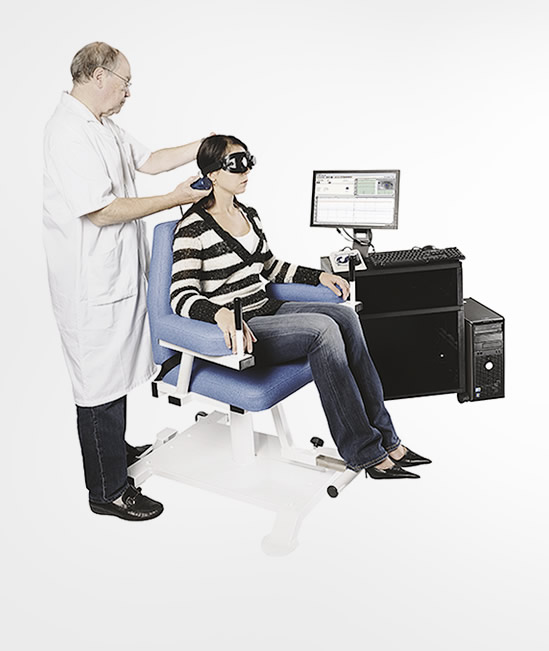
The multi-frequency vibrator is the device used for the detection of vibration-induced nystagmus.
FAST AND RELIABLE EXAMINATION
In less than 30 seconds, the symptoms of a vibration-induced nystagmus allow a rapid detection of unilateral vestibular dysfunction, particularly the compensated vestibular deficit. The vestibular vibrator can therefore allow an early diagnosis of a neurinoma, even in patients with no balance problems.
EASY TO DO IN DAILY PRACTICE
The test protocol is very simple. The vibrator is applied to the patient’s left and right mastoid while observing his eyes. If there is a nystagmus, it will appear immediately, remain stable and disappear when stimulation is interrupted.
TEST WELL TOLERATED
The examination is so short that it does not cause any disturbance to the patient. The rubber membrane in contact with patient’s head is biocompatible and replaceable; there is therefore no risk of allergic reactions.
IDEAL TO COMPLETE THE VESTIBULAR INVESTIGATION WITH A RELIABLE INSTRUMENT
The multi-frequency vestibular vibrator is the result of years of experience in the diagnosis of vestibular disorders. Thanks to the three vibration frequencies available (30, 60 and 100 Hz), it can cover all patient conditions. It perfectly combines with the U-VNG system.
 NystaLab (system)The NystaLab system is a wireless video frenzel system enabling to visualize and analyze the eye movements of a patient. It can be used for diagnostic purposes as well as for rehabilitation.
VF405 provides ideal conditions for fixation-free observation and recording of eye movements during spontaneous testing, positional and Dix-Hallpike testing, head impulse testing and user-defined testing.
The VF405 is an independent software module operated from the OtoAccess™ patient database. The user interface is designed for maximum user satisfaction with intuitive procedures and a supportive design.
SYNAPSYS MED4
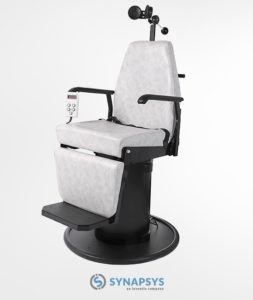
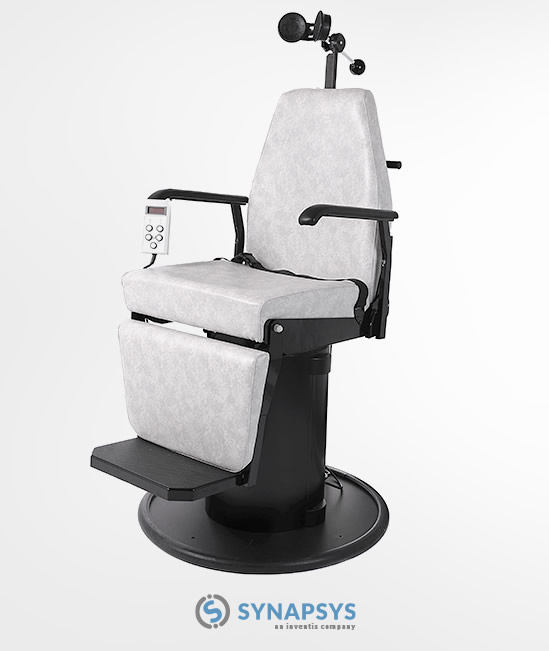
The Synapsys MED4 rotary chair completes the battery of video-nystagmographic tests with rotational kinetic exams.
The kinetic tests allow the study of nystagmus induced by angular accelerations applied to the vestibular system, with or without visual reference.
Through Synapsys VNG software, you can control the position of MED4 chair and the amount of energy released to the labyrinth. These examinations then allow the precise calculation of vestibular gain, phase, symmetry and time constants.
ALL KIND OF KINETIC STIMULATIONS
MED4 rotary chair can be used in manual mode or controlled by the Synapsys VNG software, and allows to perform a wide range of kinetic examinations. Sixteen stimulation waveforms are available, including various sine waveforms, multi-frequency, speed step and sudden stop tests.
MAXIMUM COMFORT AND SAFETY FOR THE PATIENT
The MED4 rotary chair can be used for any other vestibular test, including, of course, kinetic tests. The fully reclining backrest allows the patient to be easily positioned at 30° for caloric tests or in a supine position for BPPV treatment maneuvers.
COMPLETES YOUR VESTIBULAR SYSTEM
The MED4 rotary chair, which perfectly integrates with the Synapsys VNG system, is the ideal tool to integrate and complete your balance clinic and examine low and medium frequencies.
SYNAPSYS SPS
EVALUATION
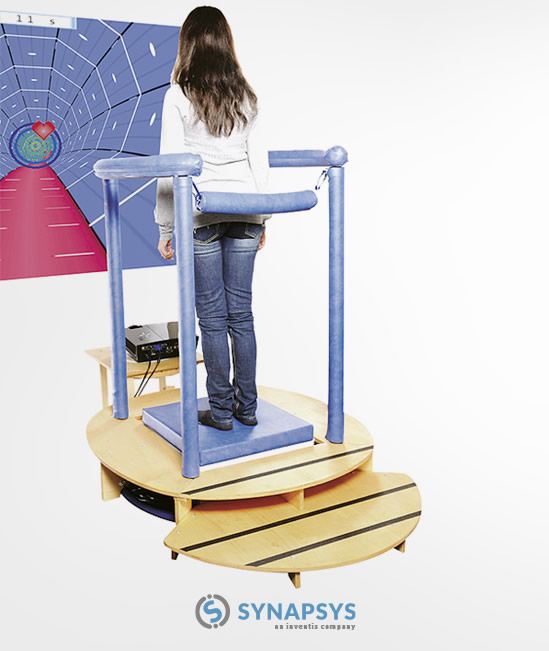
The Dynamic SPS allows to measure the static and dynamic balance of patients and to assess their somatosensory, visual and vestibular inputs, making it a useful equipment for ENTs, geriatrics and physiotherapists involved in functional rehabilitation.
The Synapsys SPS platform is equipped with different tools allowing to stimulate each sensory input with many disturbing factors and to design a customized rehabilitation protocol for each patient.
Synapsys SPS is available in two upgradeable versions, Static SPS and Dynamic SPS, which cover the different needs. In addition to the protocols of the Static SPS (SOT, Romberg test and Stimulated Vestibular Evolution Assessment), the Dynamic SPS offers also the Fall Risk Assessment, a fall risk indicator for the elderly, which combines the results from different types of translational tests. Thanks to the security support bars, the patient is safe for the whole duration of the test.
REHABILITATION
The Dynamic SPS offers different types of exercises (stabilization, weight shift, weight bearing and postural control), which can be combined in different rehabilitation programs, specific to each patient.
Results of each rehabilitation session can be all displayed in the same graph, allowing you to constantly monitor rehabilitation progresses of your patients.